Specification
Vinyl wear layer explained for Singapore homes
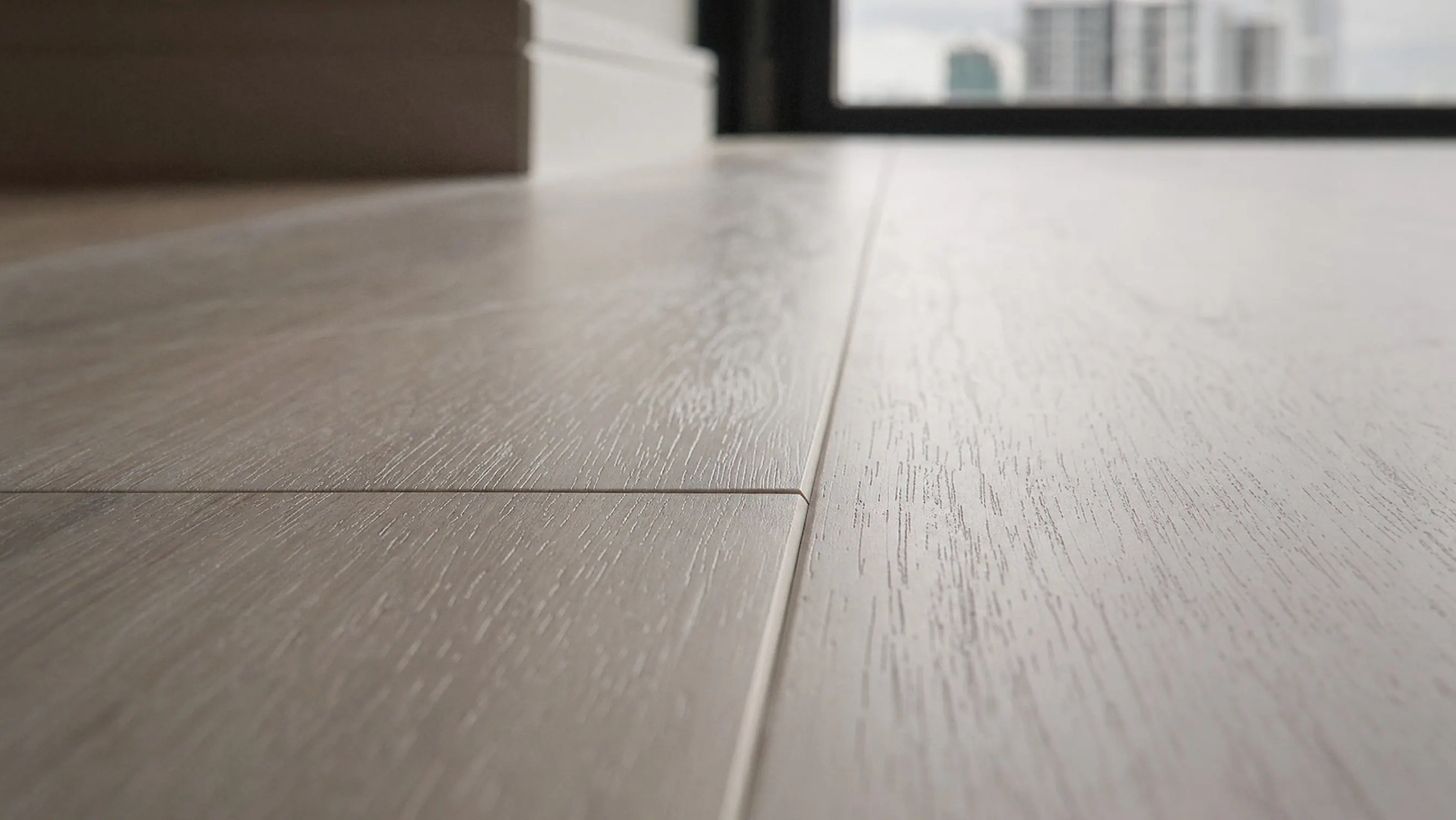
The clear layer near the top of a vinyl plank takes every footstep the floor will ever get. It is measured in tenths of a millimetre, and it is not the same number as the plank's total thickness.
What it is
You never walk on the plank. You walk on the wear layer.
Underneath, a vinyl plank laid in a Singapore HDB, condo or landed home is a printed picture of timber or stone on a rigid core. The wear layer is the clear film over that picture. Every footstep, every chair drag and every grain of sand carried in on a shoe lands on it and on nothing else. When a floor goes dull, cloudy or scratched along the route people walk, that is the wear layer gone. The plank has not worn through, and it will not.
The build up
What is actually under your foot, in order
A vinyl plank is a stack, and the catalogues describe it the same way whichever range you read: a clear finish coat, then the wear layer, then the printed decor, then the core that makes the plank rigid, then the backing that meets the subfloor. Only the second layer down does the surviving.
Finish coat
- A thin cured coating on the very top. It sets the sheen and how easily the floor cleans. It is not the wear layer, and its thickness is not included in the wear layer figure.
Wear layer, 0.3mm to 0.7mm
- The transparent layer that takes all of the abrasion. This is the number that belongs on your quote, and it is the only layer in the stack whose thickness changes what the floor survives.
Decor layer
- A printed sheet. It is the oak, the walnut, the marble or the slate you chose from the sample. It carries no load and does no work. Once the wear layer above it has gone, it goes next, and it cannot be sanded back because there is nothing underneath it to sand back to.
Core
- The rigid body of the plank and the bulk of its total thickness. The ranges on this page are built either on a 5.0mm plank or on a 6.0mm plank. That figure governs stability, sound and how the plank sits over a subfloor that is not perfectly flat. It does not govern wear.
Backing
- The underside that meets the prepared subfloor. The catalogues describe it as a rigid backing, and on the thicker 6.0mm body as an anti-skid face.
The ladder
Three tiers, two tenths of a millimetre apart
Written as specification rather than as good, better, best. None of these is the wrong floor. Each one is matched to a different amount of traffic, and the cheapest quote in the market usually lives on the first line.
-
0.3mm
The entry tier. Right for a bedroom, a study, a spare room, or a rental unit being turned around between tenancies. It is not a lesser floor, it is a floor matched to a lighter job. Put a desk chair on castors on it and the traffic lane will show. -
0.5mm
The sensible default for most Singapore homes, and where most of the market sits. It carries a family, a hallway, a living room and ordinary furniture without complaint. If a quote does not state a wear layer at all, this is the tier you are probably picturing and the one you have no proof of. -
0.7mm
Genuine commercial specification. Shops, offices, food and beverage, castor chairs, and homes the owner intends to keep for a long time. The thicker 6.0mm body is part of the same decision rather than an extra: it sits flatter over an imperfect substrate and carries sound better than a 5.0mm plank.
Formats available across the three tiers, as printed in the catalogues we specify from.
- Plank width
- 169 to 228mm
- Plank length
- 1210 to 1221mm
- Large format tile
- Up to 914 by 457mm
- Herringbone
- 150 by 900mm
The ranges
The ranges we lay, by tier
The six brands we carry, set against the three tiers above, so you can see which specification a quotation is actually written on before you compare two prices. One of them prints no wear layer figure at all, and it is listed here saying exactly that rather than placed on a rung it has not earned.
Superior Floor
Entry tier, plank format.Naturesteps, Naturesteps Premium, Efloor, Wood Origins
Family tier, and the busiest rung on the ladder. Plank across all four, plus tile and herringbone formats from Efloor and Wood Origins.Titan
Heavy traffic tier, plank and large format tile.Ecopluz
Its catalogue prints no wear layer figure, so we ask the supplier for it in writing rather than place it on this ladder.
In the traffic lane
Wear does not arrive evenly
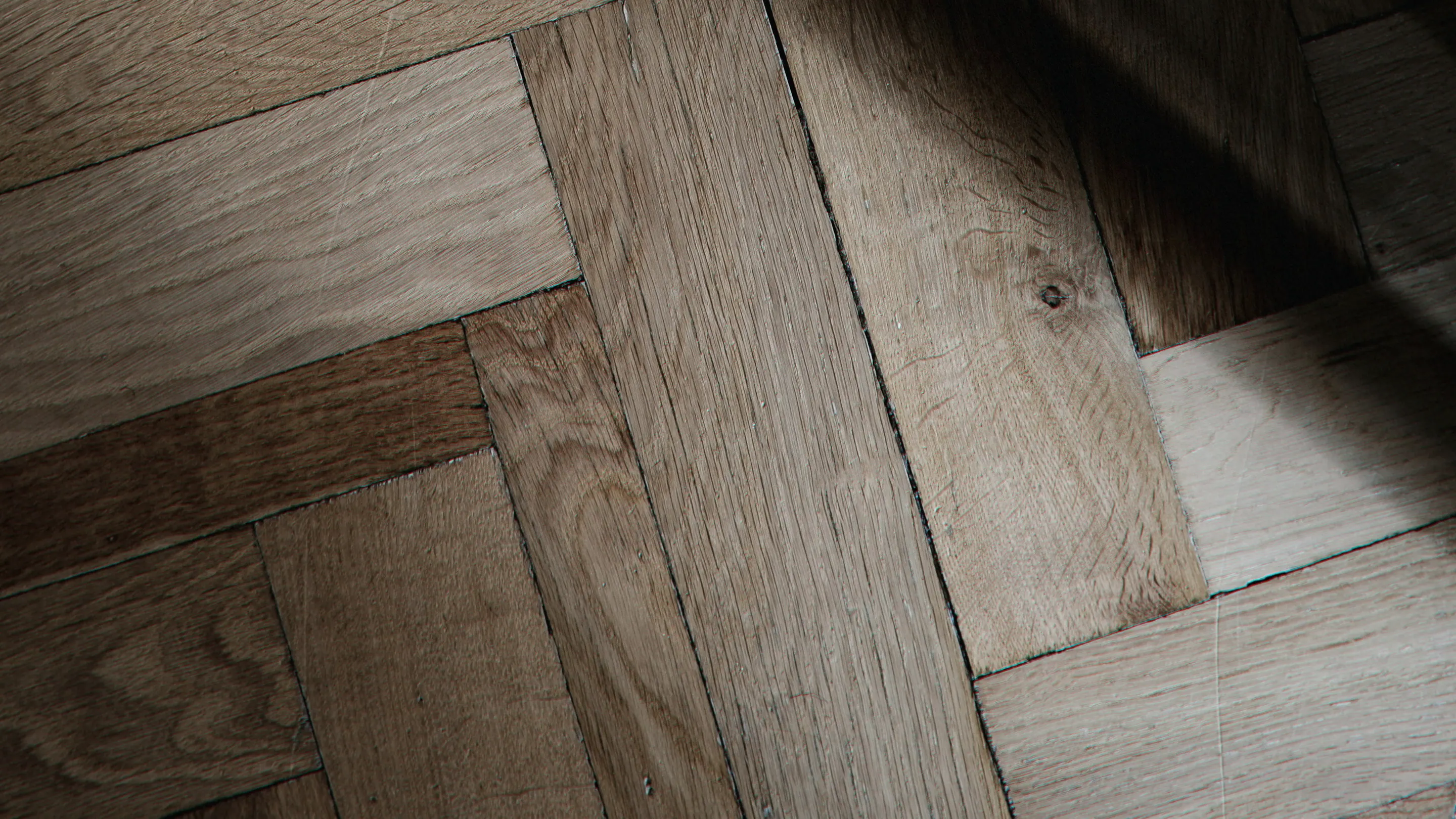
A floor does not dull all over. It dulls where people walk: the line from the door to the kitchen, the turn at the end of the corridor, the half metre in front of the sofa. That lane is the whole argument for buying the next tier up in the two or three rooms that have one.
The common mistake
Total thickness and wear layer are two different numbers
This is the single most useful thing to hold in your head while reading a quote. A 5.0mm plank with a 0.3mm wear layer and a 5.0mm plank with a 0.5mm wear layer are both sold as 5mm vinyl. They feel identical underfoot on the day they are laid. They do not cost the same to live with.
Total thickness
- The whole plank, finish coat down to backing
- 5.0mm, or 6.0mm on the heavy traffic tier
- Decides rigidity, sound, and how the plank bridges an uneven subfloor
- The bigger number, so it is the one most quotes lead with
- Tells you almost nothing about how long the surface will last
Wear layer
- One clear layer inside that plank, near the top
- 0.3mm, 0.5mm or 0.7mm
- Decides abrasion, scratching, and how the traffic lane ages
- The smaller number, and often not printed at all
- The number to ask for in writing before you sign
Not every catalogue prints a wear layer figure. If yours does not, ask for it in millimetres rather than in words like commercial grade or heavy duty, which mean nothing on their own and cannot be checked.
Matching the tier to the room
Where each one belongs
Wear layer is a room by room decision before it is a whole house one. Most homes are honestly served by one tier through the living areas and a lighter one in the bedrooms, and there is no rule that says a house has to be specified on a single line.
Bedrooms and studies
Light traffic, soft furniture, shoes usually off at the door. 0.3mm does this job, and the money saved is better spent on the hallway than spread thinly over the whole flat.
Living rooms and hallways
The routes everybody uses, and where the traffic lane forms first. 0.5mm is the default here, and it is the default for a reason.
Rental units between tenancies
The number that matters to a landlord is cost per year of tenancy, not cost per square foot. 0.3mm is a defensible choice when the floor is expected to be replaced on a cycle.
Flooring for rental unitsDesks and castor chairs
A desk chair on castors is the hardest thing most homes do to a floor, and it does it to about a square metre of it. 0.7mm under the desk, whatever the rest of the house is laid on.
Shops, offices, food and beverage
Trolleys, cleaning machines and a few hundred pairs of shoes a day. 0.7mm on a 6.0mm body is the specification rather than an upgrade. The Tanjong Pagar office runs on a commercial 0.7mm wear layer across 5,000 sq ft.
See that officeA house you intend to keep
If the floor is meant to outlast the renovation cycle, specify it for the last year of its life rather than the first. The step between tiers is a small line on the quote and a large one at the point you would otherwise be lifting the floor again.
Landed house flooring
The part the number cannot fix
A thicker wear layer over a bad subfloor still fails
A 0.7mm wear layer laid over a floor that was not levelled, not moisture tested and not primed will still telegraph every hollow, still lift at the joints and still wear unevenly, because the plank underneath it is moving. The wear layer decides how long the surface survives. The substrate decides whether the floor survives at all. If you only have budget for one of the two decisions, this is the one to spend it on.
What we level with
ARDEX K 310, a self levelling compound from ARDEX-QUICSEAL Singapore, laid at 3 to 8mm to the manufacturer's own preparation specification. It holds Singapore Green Building Product certificate SGBP 3694, valid until 9 December 2026. That certificate belongs to the product and its manufacturer. It is not ours, and it says nothing about our workmanship.
Surface foundationWhy it costs you two days
At 3mm that compound is walkable in 3 to 4 hours and ready to take a floor covering after 48 hours. A programme that has the vinyl going down the morning after the levelling is not a fast programme, it is a wrong one. Worth knowing before you agree to a handover date.
Self levelling
The step nobody photographs, and the one that decides whether a long uninterrupted run of plank reads flat or reads like a series of shallow dishes with the light across it.
Moisture testing
Relative humidity and surface readings taken before anything is specified, because a damp screed does not become a lifted plank until long after the crew has left.
Common questions
Four short answers, if you read nothing else
What is a vinyl wear layer?
- The wear layer is the clear layer near the top of a vinyl plank, above the printed decor and below the finish coat. It takes all the abrasion from footsteps, chair legs and grit, and it is measured in tenths of a millimetre: 0.3mm, 0.5mm or 0.7mm. It is not the same number as the plank's total thickness.
Is a 5mm plank better than a 0.5mm wear layer?
- They are two different measurements of the same plank, not two options. Total thickness, usually 5.0mm or 6.0mm, is the whole plank and governs rigidity and how it sits over an uneven subfloor. The wear layer is one clear layer inside it and governs how long the surface lasts. A 5.0mm plank can carry a 0.3mm or a 0.5mm wear layer and feel identical underfoot on the day it is laid.
What wear layer do I need for a Singapore home?
- 0.5mm is the sensible default for living rooms, hallways and family traffic, and it is where most of the market sits. 0.3mm is matched to bedrooms, studies and rental units between tenancies. 0.7mm on a 6.0mm body is genuine commercial specification for shops, offices, food and beverage, castor chairs and homes the owner intends to keep for a long time.
Does a thicker wear layer fix an uneven floor?
- No. A thicker wear layer laid over a subfloor that was not levelled, moisture tested and primed will still telegraph hollows, still lift at the joints and still wear unevenly, because the plank is moving. The wear layer decides how long the surface survives. The substrate decides whether the floor survives at all.
Warranty
Two different promises, and buyers mix them up
The long warranty figures printed in flooring catalogues belong to the manufacturer and cover manufacturing defects in the material. They are not a promise that the floor will look new in year ten, and they are not the installer's warranty. Ours is separate, shorter, and about a different thing.
What does a manufacturer's warranty actually cover?
- Manufacturing defects in the material: delamination, a fault in the print, a plank out of tolerance. It is a product warranty from the company that made the plank, claimed back through the supply chain. It does not cover wear from use, damage, or anything to do with how the floor was laid.
What does Eben Solutions warrant?
- Our workmanship, for one year after handover. That is the part we control: preparation, levelling, setting out, the joints, the trims and the finish. Material warranties follow the manufacturer's terms and we pass them on to you directly.
Does a longer warranty mean a thicker wear layer?
- No, and the two are not connected in the way people assume. Warranty length is a commercial term set by the manufacturer. Wear layer thickness is a physical property of the plank. Read them as two separate lines and put more weight on the one measured in millimetres.
What should be on my quote?
- The wear layer in millimetres, the total plank thickness in millimetres, the format and size, and substrate preparation as its own priced line rather than folded into a rate per square foot. If the wear layer is not stated, ask for it in writing before you sign anything.

Let's build a brighter space together
Ready to transform your space?
Book a site visit and let's discuss your renovation needs.
Book a site visit- Free site assessment
- No obligation quote
- Singapore islandwide