
Condo
Flooring renovation in a Singapore condo: what MCST approval actually requires
A permit application, a refundable deposit and a fixed work-hour window are the usual shape of it. The exact form varies by development, and it sits alongside the floor programme, not ahead of it.
The short answer
A permit, a deposit and a work-hour window, run by your management corporation
Most Singapore condominiums require a renovation permit application and a refundable deposit before any hacking, tiling or floor removal starts, plus a fixed work-hour window and, on many developments, no work on Sundays or public holidays. Some also require lift or loading-bay booking for moving materials in and debris out. The exact form, deposit amount and hours are set by each management corporation individually, not by a single Singapore-wide rule, so the one universal step is confirming them with your own MCST or managing agent before a floor programme is set.
The usual shape of it
What MCST approval generally covers
These four appear in some form on most Singapore condominiums. What varies is the detail, not whether the step exists.
A renovation permit application
Submitted to the management office before hacking, tiling or floor removal begins, describing the scope of work.
A refundable renovation deposit
Held until the management office inspects the completed work and the common areas used to move materials.
A fixed work-hour window
Most developments set the hours renovation noise is permitted, and many exclude Sundays and public holidays entirely.
Lift and loading-bay booking
On developments that require it, for moving materials in and debris out without disrupting other residents.
Two timelines, one programme
The MCST approval and the floor programme have to run together, not one after the other
A permit that clears after the floor has already been ordered is a delay you built yourself. A permit sequenced against the same programme as the flooring is not.
Skipped versus handled
Where the MCST step actually bites
The approval itself rarely goes wrong. What goes wrong is treating it as separate from the floor programme instead of part of it.
If the MCST step is skipped or rushed
- Work can be stopped mid-job once the management office notices
- The deposit is deducted for common-area damage a proper method statement would have prevented
- A noise complaint escalates faster when no start date was ever registered with the MCST
- The lift or loading bay is unavailable when materials arrive because nobody booked it
Handled as part of the project
- The permit application is submitted and the programme sequenced around the approval before materials are ordered
- The deposit and any required method statement are handled by the admin team, not left for the homeowner to chase
- Hacking and other trades are scheduled inside whatever work-hour window the MCST sets
- One project manager tracks the approval alongside the floor programme, not two separate timelines
How Eben handles it
The paperwork runs on the same programme as the floor
Whichever finish is going in, the permit and the floor are one project manager's problem, not the homeowner's second job.
Permits, deposits and approvals, handled by the admin team
- Permit applications, MCST deposits and hacking approvals are all handled by our admin team as part of an All-In project, coordinated with the flooring programme rather than run separately.
Controlled, strata-compliant hacking
- Removal and disposal carried out to the standard a management corporation expects, not just what gets the job done fastest.
One project manager for the paperwork and the floor
- The same person tracking the MCST approval also tracks the flooring programme, so a permit delay is caught early rather than discovered on install day.
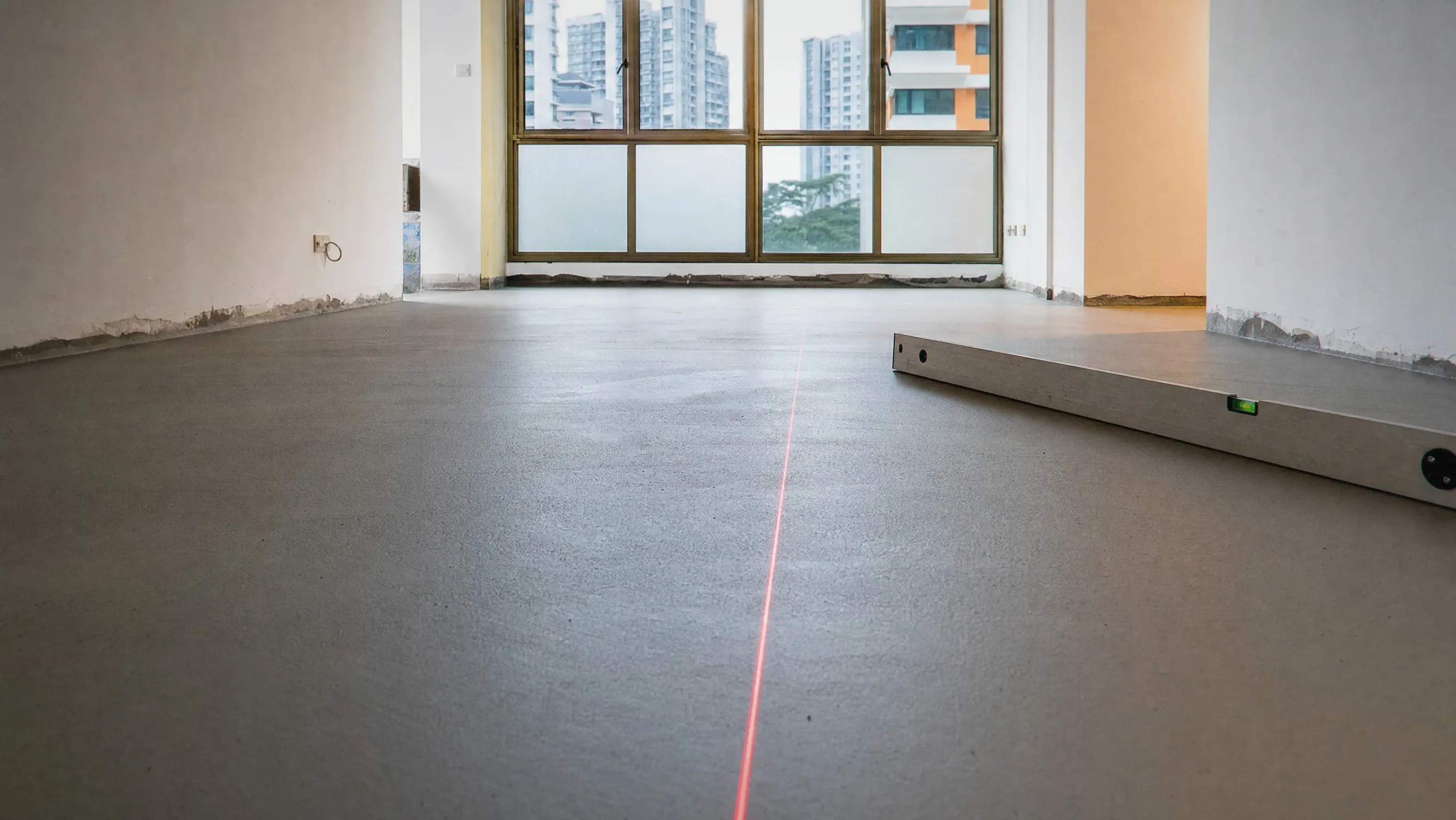
Moisture testing and laser-checked levelling, regardless of the building
- The substrate gets the same foundation standard whatever the MCST's own rules require, because that standard is Eben's, not the building's.
Questions worth asking
Before you set a renovation date
The questions worth putting to your management office and your contractor before a programme is fixed.
Do I need MCST approval before renovating a condo floor in Singapore?
- Almost always, yes. Most Singapore condominiums require a renovation permit application and a refundable deposit before hacking, tiling or floor removal begins, along with a fixed work-hour window. The exact form, deposit and hours are set by your own management corporation, so it is worth checking directly rather than assuming a standard figure.
Does Eben Solutions handle the MCST permit and deposit for me?
- Yes, as part of an All-In project. Permit applications, MCST deposits and hacking approvals are handled by our admin team, coordinated under the same project manager as the flooring itself.
What happens if a condo renovation skips the MCST approval step?
- Work can be stopped mid-job once the management office notices, and a deposit can be deducted for common-area damage that a proper method statement would have prevented. A renovation that never registered its start date with the MCST also has a harder time when a neighbour raises a noise complaint.
Do all condos in Singapore have the same MCST renovation rules?
- No. The permit form, the deposit amount, the work-hour window and whether lift or loading-bay booking is required all vary by development. Always confirm the current rules with your own management corporation or managing agent before a programme is set.
Does MCST approval affect how the flooring itself is installed?
- No. Moisture testing and laser-checked levelling happen to the same standard on every project regardless of the building's MCST rules. What the MCST governs is timing and site access, not the workmanship standard the floor is installed to.
Where this goes next
The permit and the floor, run by one project manager
Permits, deposits and hacking approvals sit inside the same All-In programme as the flooring, so nothing is left for you to chase separately.
More from the blog
Related reading
The paperwork is one half of a smooth condo renovation. The substrate underneath the floor is the other.
-
Do you need to waterproof before laying vinyl or microcement in Singapore?
Wet areas, balconies and a damp screed all fail the same way under a floor that was never waterproofed. What actually needs a membrane, and what doesn't. -
All guides
Every real guide on this site, from the Eben Solutions craft house.

Let's build a brighter space together
Ready to transform your space?
Book a site visit and let's discuss your renovation needs.
Book a site visit- Free site assessment
- No obligation quote
- Singapore islandwide