Wet areas
Microcement or vinyl flooring for a Singapore bathroom?
Neither one waterproofs the room by itself. Once that's settled, microcement suits a shower recess run as one seamless surface, and vinyl suits the dry side, where a fully bonded system sits flatter and quieter.
The short answer
It depends which part of the bathroom, not which material you prefer
Inside a shower recess, microcement's seamless run from floor to wall removes the one thing a wet joint needs to fail: a joint. On the dry side of the same bathroom, vinyl is a genuinely practical finish, and a fully bonded glue-down system is the sensible choice that close to standing water rather than a click-lock system. Neither answer changes the harder rule underneath it: a wet area gets a tested waterproofing membrane first, whatever finish is going on top, because both materials fail the same way over a substrate that was never checked.
Room by room
Where each finish is the safer default
This is not a single verdict for the whole bathroom. A shower recess, a vanity run and a dry-side floor are three different decisions, and the substrate condition can overrule either material.
Inside the shower recess
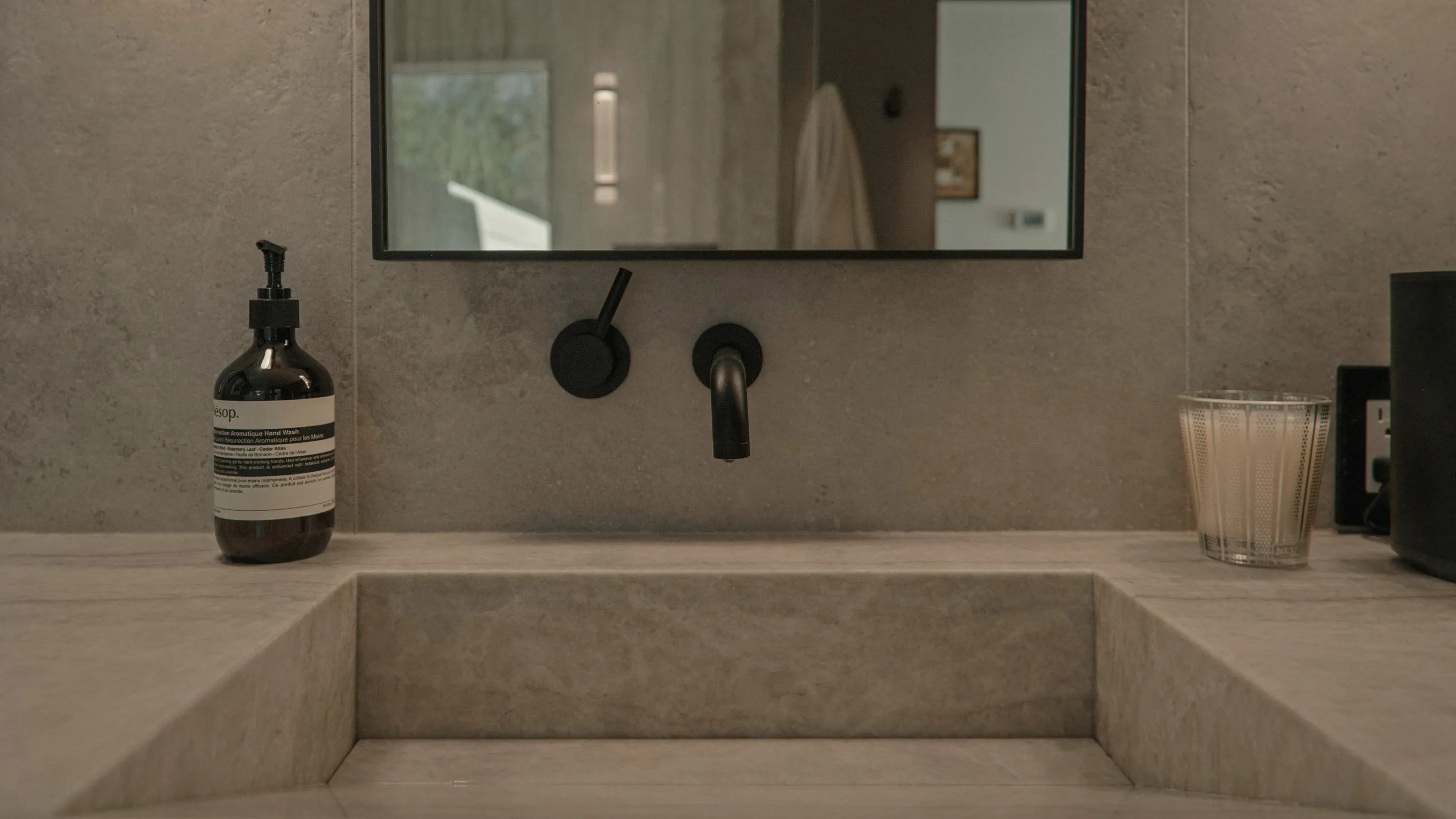
Microcement's default here: floor, wall and basin return as one continuous surface, over a membrane installed and tested first.
Vanity tops and basins
Formed as one piece with the counter in microcement, no grout line at the tap or the edge for water to sit in.
The dry side of the bathroom
Outside the direct splash zone, a fully bonded glue-down vinyl system is a practical, genuinely viable finish, still over a membrane if the room tests as a wet area.
A substrate that is still moving
Flexing timber, unrepaired cracks or live moisture will telegraph through either finish. Neither material is the fix; the substrate is.
No joint, no seam
The argument for microcement in a wet area is structural, not decorative
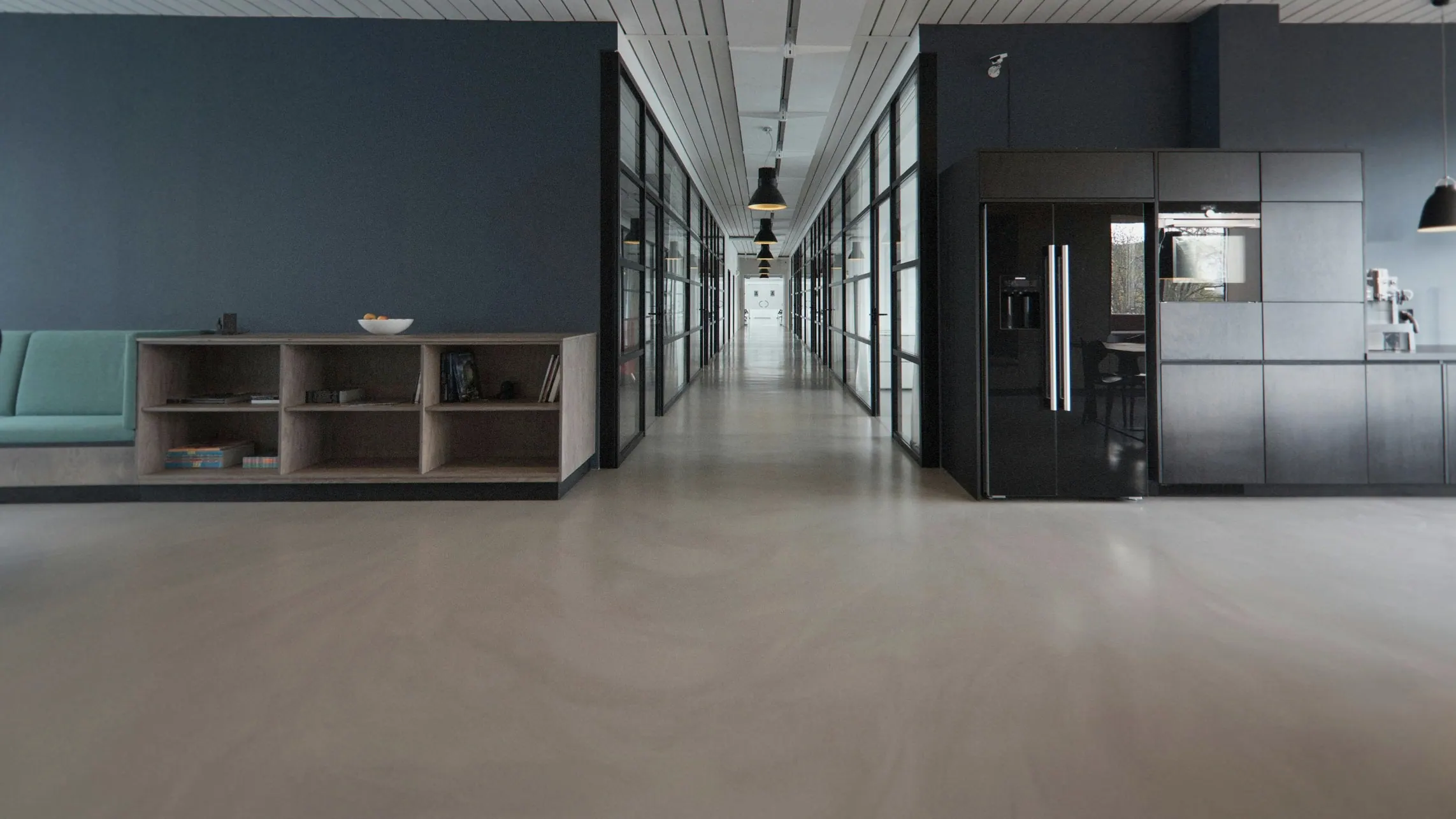
A tile or plank floor is a field of joints. Microcement is a single trowelled surface. In a room where water is the enemy, fewer joints is not a style choice, it is where the failures were going to start.
Two finishes, the same wet area
What each one actually does differently
Both go over the same tested membrane. What differs is how each one behaves at the edges, and what it costs you in upkeep and detailing.
Vinyl in a wet area
- Needs the same membrane and moisture test as microcement before it goes down; the finish never substitutes for it
- A fully bonded glue-down system, not a click-lock one, is the practical choice this close to standing water
- Seams at the wall, the drain and the door threshold need trims and sealant, more junctions to detail than a seamless surface
- A worn or damaged tile can be replaced on its own without disturbing the rest of the floor
Microcement in a wet area
- Runs floor to wall to basin as one continuous surface, so there is no perimeter joint at the shower threshold
- Corners, the basin return and the shower threshold are trowelled by hand on site, not cut and fitted from a factory edge
- Sealed at handover and resealed periodically to keep protecting itself, not sold as a maintenance-free surface
- Not a waterproofing layer on its own: the membrane goes on first, same as it does under vinyl
Neither column is the whole answer. The membrane underneath both of them is.
How Eben handles it
One crew, whichever finish the room needs
The team that tests the moisture, installs the membrane and lays the finish is the same team whether the answer is microcement, vinyl, or both in the same bathroom.
Moisture testing, before either finish is chosen
- Relative humidity and surface readings taken before the material is specified, so a wet zone is identified rather than assumed.
Waterproofing, before the finish, whichever one it is
- Sheet, PU and cementitious membrane systems matched to the substrate and the load, installed and tested before microcement or vinyl goes anywhere near the room.
A sample panel before microcement scales
- Put up in your own space, in your own light, so the pigment, trowel pattern and sealant sheen are signed off before a square foot of the real surface is laid.
One team, one warranty, either finish
- The craftsmen who waterproof, level and lay either material are on Eben's own payroll. Workmanship is warranted for one year after handover; material warranties, including the vinyl range's own wear warranty, follow each manufacturer's terms.
Questions worth asking
Before you choose a wet-area finish
The questions worth putting to any quotation before the material is picked, not after.
Is microcement or vinyl better for a Singapore bathroom?
- It depends on which part of the bathroom. Microcement's seamless, jointless surface suits a shower recess and a wall-to-floor run because there is no perimeter joint at the threshold for water to find. Vinyl suits the dry side of the room, where a fully bonded glue-down system sits flatter and quieter than a click system. Both need the same waterproofing membrane underneath if the room is a wet area.
Does microcement need waterproofing in a bathroom?
- Yes. Microcement is a 2 to 3mm decorative and functional coating, not a waterproofing layer. In a shower or wet zone it goes over a proper membrane system that is installed and tested first, the same rule that applies whatever finish sits on top.
Can vinyl flooring go inside a shower in Singapore?
- It is not the usual choice right inside a shower recess. Vinyl is more commonly used in the wet zone outside the shower, over the same tested membrane, where a fully bonded glue-down system is the practical option this close to standing water rather than a click-lock system, which is the first thing to open and cup if moisture ever gets underneath it.
How thick is a microcement bathroom surface?
- 2 to 3mm, hand-trowelled in thin layers over the prepared substrate. That thinness is also why it can usually go over an existing floor or wall without raising a threshold or cutting a door.
What warranty applies to a wet-area floor from Eben Solutions?
- One year on workmanship after handover, the same figure that applies to every finish. Material warranties, including the vinyl range's own wear warranty, follow each manufacturer's separate terms.
Where this goes next
Whichever finish suits your bathroom, the membrane comes first
Microcement or vinyl, wet zone or dry side, Eben tests the substrate, waterproofs it and levels it before either finish goes down.
More from the blog
Related reading
The same argument this article makes about wet areas applies to every finish on this site: what's underneath decides what lasts.
-
Do you need to waterproof before laying vinyl or microcement in Singapore?
Wet areas, balconies and a damp screed all fail the same way under a floor that was never waterproofed. What actually needs a membrane, and what doesn't. -
All guides
Every real guide on this site, from the Eben Solutions craft house.

Let's build a brighter space together
Ready to transform your space?
Book a site visit and let's discuss your renovation needs.
Book a site visit- Free site assessment
- No obligation quote
- Singapore islandwide