Offices
Installing office flooring without stopping a business that can't close
Evenings, weekends or zone by zone, with dust screens up and routes protected. The floor you are not standing on tonight stays in use, and the office still opens on Monday morning.
The short answer
The floor is phased, not the business
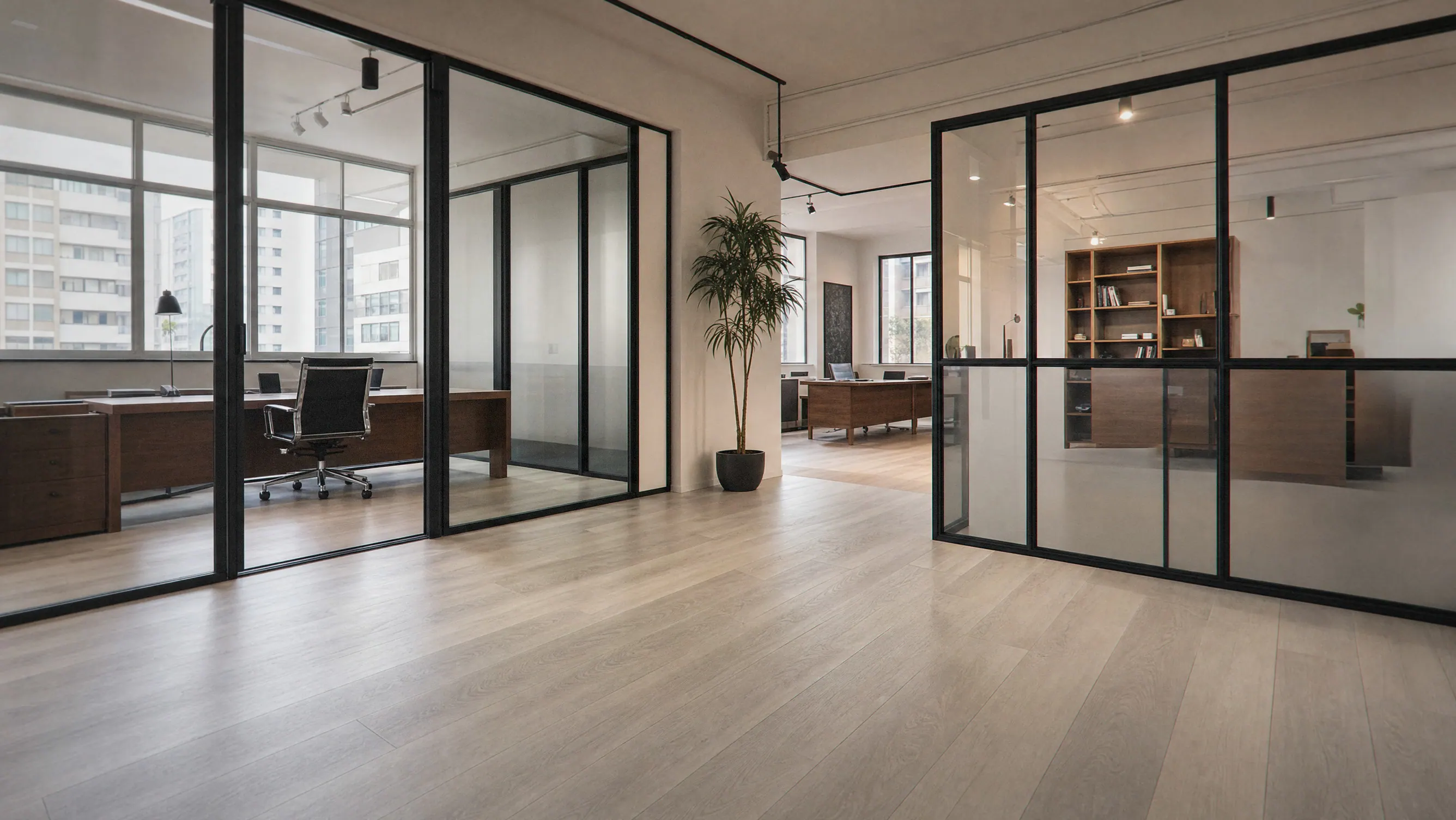
An office floor is replaced in sequence: evenings, weekends or zone by zone, so only the section being worked on is ever out of use. Dust screens go up, routes are protected, and the site is handed back tidy at the end of every shift, which is what lets the rest of the office keep functioning while the work happens. The specification steps up too: a 0.7mm commercial wear layer is where an office floor starts, not an upgrade, because it is carrying castor chairs, trolleys and a cleaning machine every night rather than a household's foot traffic.
How the programme protects the business
What actually keeps the office running
None of this is about working faster. It is about working in an order that never takes the whole office out of use at once.
Evenings, weekends or zone by zone
Work is sequenced so the areas staff are not using stay open while the current zone is being laid.
Dust screens and protected routes
The corridors and desks people are still walking through stay clean and usable while another zone is being worked on.
Site tidied at the end of every shift
Nothing is left mid-job for staff to arrive to the next morning.
One project manager for the floor and every other trade
Partitions, glass, carpentry and electrical sit under the same programme as the planks, so it is one diary, not five.

Whatever the office size
The same after-hours method, at every scale
A five-thousand square foot fit-out and a small studio floor go through the same phased programme, the same moisture test and the same laser-checked levels.
Phased versus unplanned
Where an office fit-out actually loses time
The floor itself rarely causes the delay. What usually costs time is the sequencing around it.
An unphased fit-out
- Every desk and route affected on day one, so staff work around dust and noise for the whole job
- Trades queue for site access instead of running in sequence, which stretches the programme
- A closed floor stays closed until the whole job finishes, not just the zone being worked on
- No single point tracking the floor alongside partitions, glass and cabling, so a slip in one trade hides inside another's schedule
Eben's phased approach
- Evenings, weekends or zone by zone, so only the section being worked on is out of use
- Dust screens and protected routes keep the rest of the floor usable and clean
- All-In trades, partitions, glass, carpentry and electrical, run under the same project manager as the floor
- A written quote and programme within 48 hours, so the business knows which nights or zones are affected before work starts
How Eben handles it
Five steps, one project manager, one programme around your hours
The same sequence runs whether the job is a small studio or a five-thousand square foot floor.
Consult and measure, quote within 48 hours
- A site visit, a moisture test, then a written quote with a programme against it, so you know which nights or zones are affected before anything is booked.
Specification matched to office traffic
- 0.7mm commercial wear layer as the starting point, not an upgrade, matched to castor chairs, trolleys and daily foot traffic.
Work phased, dust screens up, routes protected
- Evenings, weekends or zone by zone, with the site handed back tidy at the end of every shift.
One project manager for every trade under the same programme
- Partitions, glass, carpentry and electrical scheduled alongside the floor, not chased separately across five companies.
Questions worth asking
Before you book an office floor
The questions worth putting to any quotation before a start date is set.
Can office flooring be installed without closing the office?
- Yes. Work is sequenced into evenings, weekends or zone by zone, so the parts of the floor staff are not standing on stay in use while the rest is being laid. The office does not close while the work happens.
How is office flooring work phased around staff?
- Dust screens go up, routes are protected, and the site is tidied at the end of every shift so the areas already handed back stay clean and usable. Only the zone actively being worked on is out of use at any one time.
What wear layer does commercial office flooring need?
- A 0.7mm wear layer on a 6.0mm body is the commercial specification an office starts at, rather than an upgrade, to handle castor chairs, trolleys and a nightly cleaning machine. The Tanjong Pagar office runs on this specification across 5,000 sq ft.
How long does a written quote take for an office flooring project?
- A site visit comes first, including a measure and a moisture test, then a written quote with a programme against it within 48 hours.
Can other trades be coordinated with an after-hours office flooring installation?
- Yes. Partitions, glass, carpentry and electrical work can sit under the same project manager as the floor, so the after-hours or weekend programme covers every trade rather than just the planks.
Where this goes next
Planning an office floor around a working business
Every office quote starts with a site visit and a programme built around your hours, not the other way round.
More from the blog
Related reading
Ask every quote for the wear layer figure in millimetres before you compare it against this one.
-
Vinyl wear layer explained: 0.3mm, 0.5mm and 0.7mm compared
The wear layer, not the plank's total thickness, decides how long a vinyl floor survives. What each tier is built for, and where it belongs room by room. -
All guides
Every real guide on this site, from the Eben Solutions craft house.

Let's build a brighter space together
Ready to transform your space?
Book a site visit and let's discuss your renovation needs.
Book a site visit- Free site assessment
- No obligation quote
- Singapore islandwide